

Ca Mau – the sacred southernmost point of the country – offers the experience of exploring the wild mangrove forest, the lyrical coastline, the unique river culture and the authentic cuisine of the West. The following article will introduce 10 of the most attractive tourist destinations in Ca Mau , suitable for many travel styles: from ecology, culture to virtual check-in.
See more
- Hanoi tour 1 day: Experience traditional craft villages in Hanoi
- Sapa tour 2 days from Hanoi: Hanoi – Cat Cat Village – Fansipan Peak
- Exciting Sapa tour 3 days 2 nights: Conquer Fansipan Peak and trekking villages
10 Must-visit tourist destinations in Ca Mau
1. Ca Mau Cape – “Southernmost Point of the Fatherland”
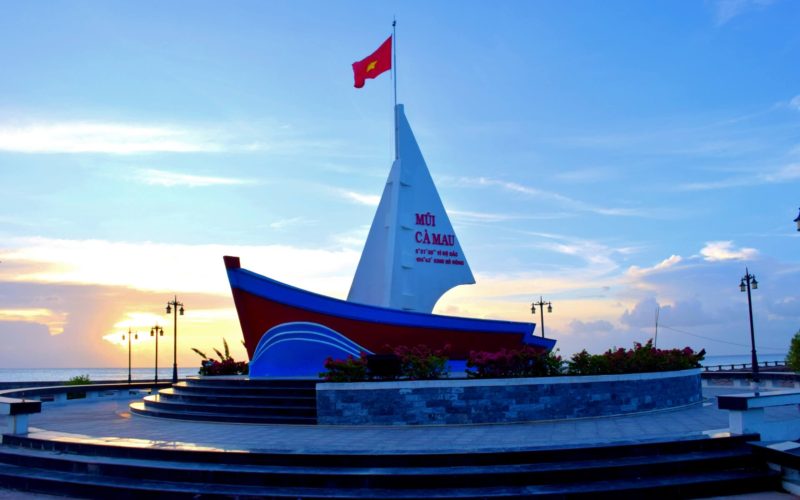
When mentioning famous tourist destinations in Ca Mau, it is impossible not to mention Ca Mau Cape – the southernmost point of the country, where the mainland finally reaches out to the sea. Located in Dat Mui commune, Ngoc Hien district, about 120 km from the center of Ca Mau city, this place not only has geographical value but is also a sacred symbol, evoking national pride.
Coming to Ca Mau Cape, visitors will be able to see with their own eyes the National Coordinate Marker GPS 0001 – the place marking the first point on the S-shaped map. Next to it is a symbolic structure shaped like a ship reaching out to the ocean, symbolizing the aspiration to reach far of the Vietnamese people. The scenery here really overwhelms people with deep green mangrove forests, vast seas and high, wide skies.
Not only is it an ideal check-in place with emotional photos, Ca Mau Cape also suggests a journey back to the roots. Here, visitors can experience climbing up to the high-rise watchtower, observing the panoramic view of the mangrove ecosystem and the rare East-West sea in the world.
2. U Minh Ha National Forest – Mysterious Melaleuca Forest of the West
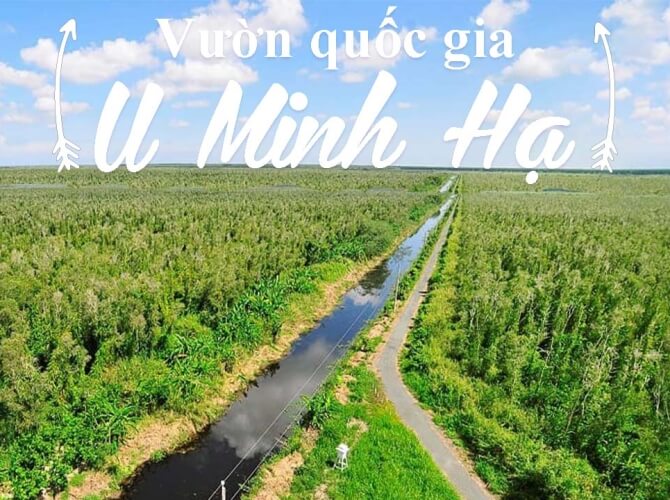
Located in the west of the province, U Minh Ha National Forest is one of the world’s precious remaining flooded forests, part of the vast U Minh forest system stretching across Ca Mau and Kien Giang. With an area of over 8,000 hectares, the forest is a place to preserve special biodiversity, of great scientific and ecological value.
Recognized by UNESCO as a world biosphere reserve, U Minh Ha is an ideal tourist destination for those who love nature and exploration. The ecosystem here is notable for its ancient cajuput forests, rich fauna such as otters, long-tailed monkeys, turtles, water snakes and more than 60 species of rare birds. During the flood season, visitors can take a motorboat along small canals through the forest, admire the lush green cajuput canopy and listen to the birds chirping throughout the space.
An experience not to be missed is climbing the 25m high watchtower to get a panoramic view of the vast cajuput forest, feeling the majesty that only wild nature can bring. In addition, visitors can also visit beekeeping models for honey, fishing, and experience being a real forest dweller.
3. Ca Mau Floating Market – A place that preserves the soul of the river countryside
Located on the Ganh Hao River, flowing through Ward 8, Ca Mau City, Ca Mau Floating Market is one of the typical images, clearly recreating the life of the Southern river region. Although not as large and bustling as Cai Rang Floating Market (Can Tho), the floating market here still retains its rustic, intimate and deeply Western identity.
The market starts operating from dawn, and is most bustling around 5-7am. Boats and ships gather to exchange all kinds of goods: from fresh fruits, vegetables, seafood to breakfast dishes such as vermicelli soup, rice noodles, and banh canh. An interesting point is that each boat hangs the goods for sale on a pole – called a “beo pole” – to help customers easily identify them from afar.
Visiting the floating market, tourists not only enjoy the cuisine right on the boat but also have the opportunity to clearly feel the simple and friendly lifestyle of the local people. The rustic voice, gentle smile and liberal way of doing business make this place one of the Ca Mau tourist destinations worth experiencing in the early morning.
4. Khai Long Beach – Pristine beach next to mangrove forest
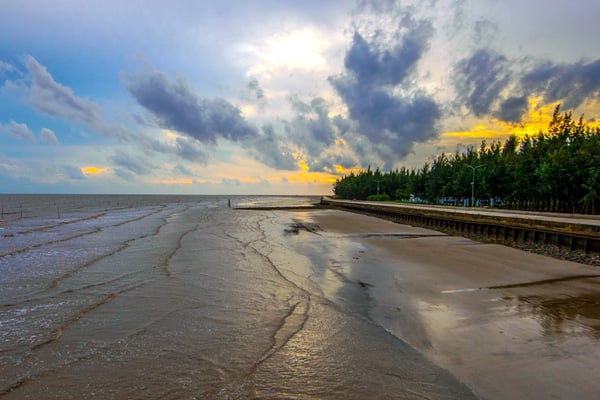
If you are looking for a place where you can both watch the sea and relax in a peaceful space, Khai Long beach is an option not to be missed. Located about 20km from Ca Mau Cape, Khai Long beach in Dat Mui commune, Ngoc Hien district, is considered one of the beautiful, pristine and little-known beaches in the far South.
Unlike the noisy beaches, Khai Long beach has a coastline of about 3 km, clear blue water, smooth sand, and rows of casuarina trees rustling in the wind. What is special is that when the tide recedes, the alluvial plain appears vast, allowing visitors to walk hundreds of meters away from the sea safely – a rare and wonderful natural phenomenon.
In addition to swimming and taking virtual photos, visitors can also camp, light a campfire or visit the eco-tourism area adjacent to restaurants, motels and entertainment facilities such as the love bridge and the observation deck. Khai Long Beach is not only an ideal tourist destination for those who want to get away from the noise but also a place to connect people and rustic nature.
5. Hon Da Bac – Geological heritage on the West coast of the Fatherland
Located about 50km west of Ca Mau city center, Hon Da Bac belongs to Khanh Binh Tay commune, Tran Van Thoi district, is a famous cluster of rocky islands with ancient and mysterious beauty. This is one of the attractive tourist destinations, suitable for both discovery and spiritual tourism.
The island cluster consists of three islands: Big Silver Stone, Small Silver Stone and Ong Ngo Island, located close together, surrounded by clear blue sea water and green mangrove forests. On the island, there are granite blocks stacked on top of each other miraculously through millions of years of weathering, forming unique shapes such as fairy hands, fairy wells, fairy feet – bearing the colors of folk legends.
In addition to its natural beauty, Hon Da Bac also has special historical value – it is the place where the Ministry of Public Security organized a campaign to crack down on the “strange ship” case in 1980. On the island, there is also a Whale Temple and a very sacred statue of Uncle Ho, which is frequently visited by locals and tourists to offer incense.
Tourists can combine sightseeing, resting at motels near the island or experiencing fresh seafood dishes at coastal restaurants. A trip to Hon Da Bac not only brings a sense of relaxation, but also helps us understand and appreciate the cultural and historical values of the western sea.
6. Nam Can Mangrove Forest – Ecological masterpiece of Ca Mau
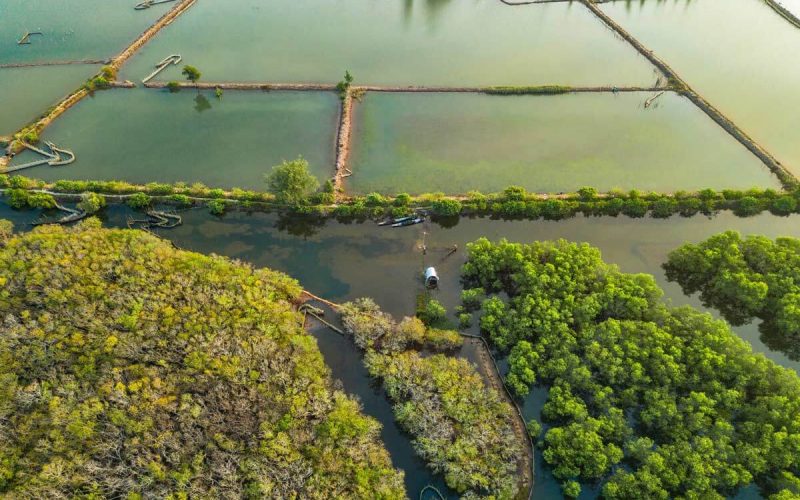
Located in Nam Can district – the southern gateway of Ca Mau province, Nam Can mangrove forest is an important part of the second largest coastal mangrove forest in the world, after the Amazon forest. This is a typical Ca Mau tourist destination for sustainable eco-tourism, where visitors can both explore nature and raise awareness of conservation.
The mangrove system here is tall, with straight trunks and tangled roots that cling deep into the ground, creating a deep green landscape that stretches for dozens of kilometers. Motorboats weave through small canals, taking visitors deep into the forest, opening up a fresh space, with only the sounds of waves, birds and wind.
Mangrove forests are not only the “green lungs” that protect the coast of Ca Mau from erosion, but are also home to hundreds of rare wildlife species such as white storks, herons, otters, long-tailed monkeys, crabs, goby fish, freshwater shrimp, etc. During the flood season, the forest becomes even more vibrant with the alluvial deposits and the proliferation of aquatic species.
In addition, many eco-tours also allow visitors to participate in exciting activities such as catching crabs, fishing for crabs, rowing a sampan or learning how to plant forests with local rangers. This is truly a valuable experience, helping you love and be more attached to the land at the end of the Fatherland.
7. Thi Tuong Lagoon – Sea Lake in the heart of the delta
Known as the “sea lake in the middle of the delta”, Thi Tuong lagoon is the largest natural lagoon in the Mekong Delta, stretching across three districts: Cai Nuoc, Tran Van Thoi and Phu Tan. With a water surface area of up to 700 hectares, the lagoon is home to thousands of households living along the river, and is also a place that attracts tourists who love to explore nature and experience the life of the Mekong Delta.
The unique feature of Thi Tuong Lagoon is its immense, wild, picturesque beauty, especially at dawn or dusk, when the water surface is gilded by the gentle sunlight. Visitors can rent a motorboat to go through the fish and shrimp cages; witness fishermen casting nets, casting nets, or experience manual fishing with the locals.
In addition to the landscape, the lagoon is also famous for its specialties such as grilled mudskippers, goby hotpot, salt-roasted crabs, etc., with a rustic flavor of the West. This is also an ideal place for picnics, short vacations or experiential tours for groups of young people and families who love the closeness of the river.
8. Ngoc Hien Bird Sanctuary – The kingdom of birds at the end of the earth
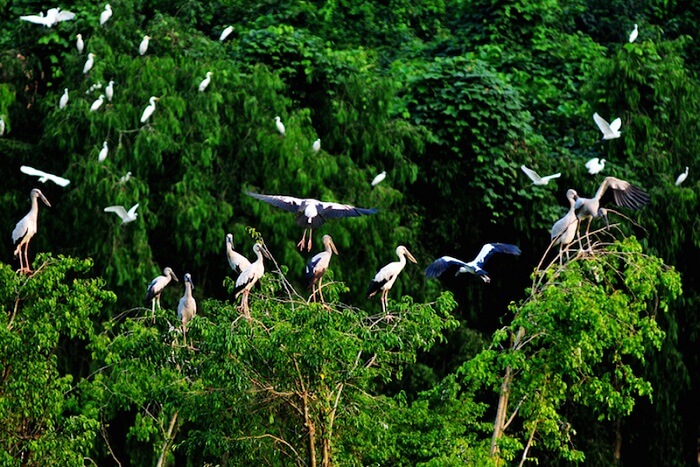
Located in Ngoc Hien district, about 100 km from the center of Ca Mau city, Ngoc Hien bird sanctuary is one of the outstanding ecological destinations in the far South. This is the habitat and breeding ground of tens of thousands of water birds such as white storks, herons, teals, gong coc… especially during the migration season from August to October of the lunar calendar every year.
The bird sanctuary covers an area of over 130 hectares, nestled between natural mangrove forests and a rich system of ponds and lagoons, creating an ideal environment for birds to thrive. Visitors coming here early in the morning or late in the afternoon will witness flocks of birds flying, swooping down to the lagoon or perching on the treetops – a lively scene rarely seen in urban areas.
In addition to observing birds with binoculars or a telephoto camera, you can also take a boat tour around the ecological area, learn about the life cycle, habits and important role of water birds in the mangrove ecosystem. This is not only an interesting tourist destination but also a great place for students, students and nature lovers to study and research.
9. Trem River – Peaceful river in the middle of cajuput forest
Trem River is a gentle river about 40km long, flowing through the U Minh Ha cajuput forest, connecting Tran Van Thoi district with riverside residential areas. With its poetic scenery, Trem River has become a popular tourist destination in Ca Mau , especially for tourists who want to get away from the noisy city to find pristine nature.
The river winds through rows of green cajuput trees, smooth grass banks and lush fruit gardens – giving visitors a peaceful, slow feeling. During the rainy season, the river water rises, carrying heavy alluvium, adding color to the immense cajuput forests on both banks. This is also the ideal time for visitors to go canoeing or rowing boats to explore the entire route.
In particular, during traditional festivals or the fish harvest season, local people often organize activities such as rowing boats, racing boats, and catching fish with bare hands – which attract many tourists. The Trem River is not only a unique ecological landscape but also reflects the simple and close working life of the people in the U Minh Ha cajuput forest area.
10. Hon Khoai Island – Wild beauty at the end of the South
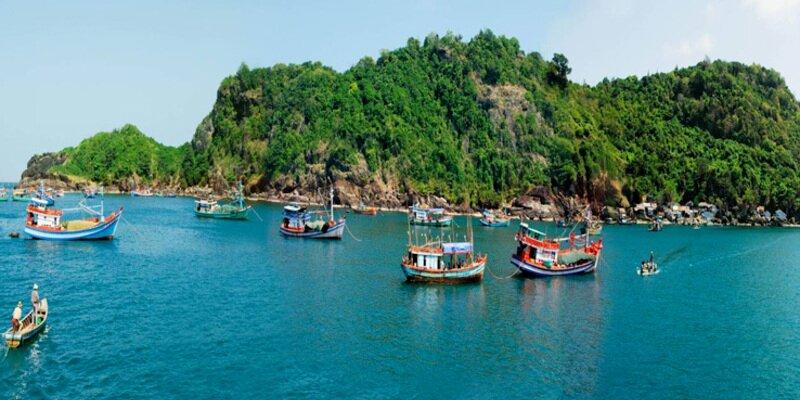
About 14.6 km southeast of the mainland, Hon Khoai Island is located in a complex of many small islands such as Hon Doi Moi, Hon Da Le, Hon Tuong… in Ngoc Hien district. With its wild, majestic beauty and rich ecosystem, Hon Khoai has long been known as the “green pearl” in the sea and sky of the southernmost region.
The highlight of the island is the ancient lighthouse built by the French in 1920 – one of the first lighthouses in Vietnam, still in good working order. From the top of the lighthouse, visitors can enjoy a panoramic view of the vast ocean, enjoy the fresh air and feel the rare peace.
Not only attractive for its natural scenery, Hon Khoai is also an ideal place for diving, fishing, coral viewing and exploring the diverse flora and fauna of the primeval forest. This is also an ideal place for tourists who are passionate about trekking, photography or those who want to temporarily leave the hustle and bustle of daily life to immerse themselves in nature.
Not only does it have symbolic value, the park is also an open space for outdoor activities such as fairs, cultural and artistic performances, and especially traditional festivals of local residents. This is the place that connects nature, people and national origins – a perfect ending to the journey to explore the southernmost land.
With its simple, rustic yet distinctive beauty, Ca Mau tourist destinations not only offer experiences close to nature but also evoke valuable cultural and historical values. From vast mangrove forests, pristine beaches to spiritual and community works – Ca Mau is a place to deeply feel the soul of the Western region at the end of the South.
See more
- Tours 8 Days 7 Nights Highlight Vietnam
- Tours 7 Days 6 Nights Highlight Vietnam
- Tours 6 Days 5 Nights Highlight Vietnam
- Tours 5 Days 4 Nights Highlight Vietnam
Contact
- Hotline/ Whatsapp/Line/Viber: +84 986282217
- Email: contact@vietflametours.com
- Fanpage: https://www.facebook.com/vietflametours
- Websites: https://vietflametours.com/